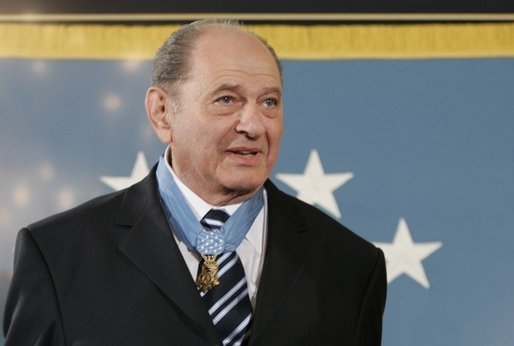
The story of Tibor Rubin: Why this Holocaust survivor risked his life to defend America
In 1945, a teenage Holocaust survivor named Tibor Rubin made a promise that would change his life.
He wanted to move to America and join the U.S. Army.
What inspired a young Hungarian who’d survived a Nazi concentration camp to risk his life for a country he’d never visited?
His answer helps explain why generations of immigrants have looked to America as a shining city on a hill.
America gave Rubin a second chance
Tibor Rubin was born in Hungary in 1929. His childhood changed when the Nazis began persecuting Jewish families across Europe.
At 13, he was imprisoned at the Mauthausen concentration camp in Austria.
He spent 14 months there, surrounded by starvation, disease, and death. He lost several family members and began to lose hope.
On May 5, 1945, American soldiers liberated Mauthausen. Rubin never forgot how they treated the survivors. Soldiers and medics brought them food, cared for the sick, and helped them recover.
Their compassion left a lasting impression on Rubin.
He promised himself that if he reached the United States, he’d join the Army to thank the country whose soldiers had saved him.
Freedom gave him a chance to build a new life
Rubin arrived in New York in 1948.
He found work, learned English, and began rebuilding his life. But he hadn’t forgotten his promise.
He tried to enlist in the U.S. Army but struggled with the English entrance exam. After several attempts, he passed. By 1950, Rubin was serving in the U.S. Army as the Korean War began.
His commander initially planned to keep him out of the fighting because he wasn’t an American citizen, but Rubin insisted on going with his fellow soldiers.
For Rubin, America’s promise of freedom and opportunity was personal.
He’d escaped a government that stripped people of their rights and found a country where he could work and choose his future.
He believed that freedom was worth defending.
He proved his commitment on the battlefield
In Korea, Rubin repeatedly risked his life for fellow soldiers.
In one instance, he defended a hill alone for 24 hours, allowing his unit to withdraw.
Later, Chinese forces overwhelmed his position. Rubin was wounded, captured, and held prisoner for 30 months.
His experience surviving the Holocaust helped him keep other prisoners of war alive.
He gathered food, cared for wounded soldiers, and encouraged men who’d nearly given up hope. Fellow prisoners credited him with saving more than 40 lives.
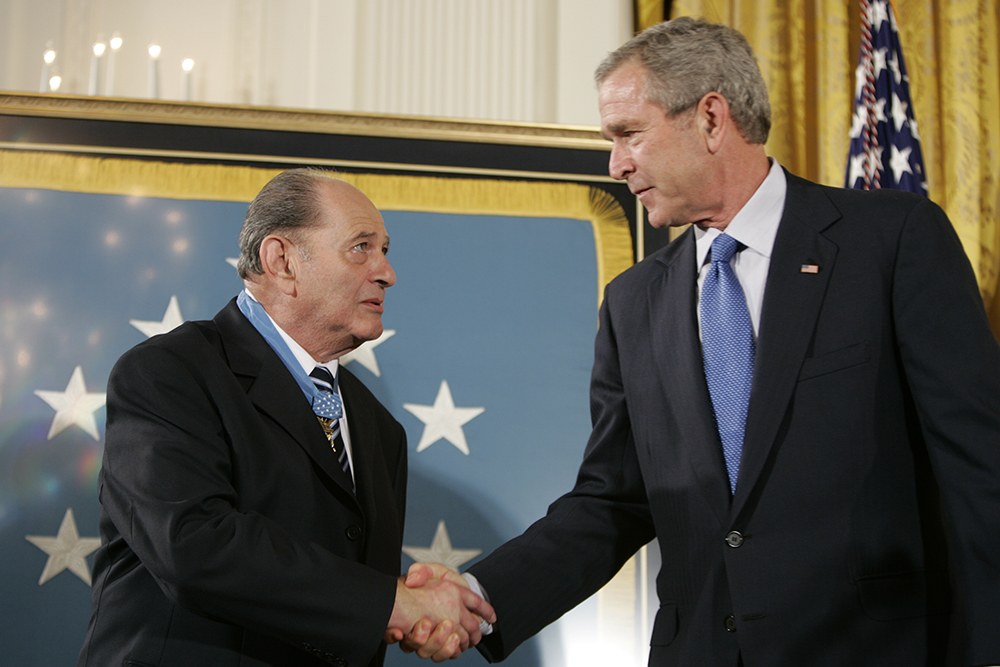
In 2005, then-President George W. Bush awarded Rubin the Medal of Honor for his extraordinary courage on the battlefield and his efforts to save fellow prisoners.
What makes America a shining city on a hill?
Rubin eventually became an American citizen, married, raised two children, and helped run his family’s business.
His life helps explain why generations of people have looked to America as a shining city on a hill.
When U.S. soldiers liberated Rubin from Mauthausen, they showed him what America’s founding principles of freedom, service, and liberty looked like in practice. Years later, he helped carry forward those same principles when he risked his life to save his fellow soldiers.
His story reminds us that the principles that have made our country a beacon of freedom must be fostered and passed on to future generations, so others like Rubin will be inspired by America as well.
You can take your next step by exploring the stories, checking out our resources, and taking a sample citizenship test to see how well you’d do if you were applying for citizenship.
Then sign up to volunteer with us as we empower veterans to have a voice in their communities.