2026 Midterms Were a Wake-Up Call on Foreign Policy. Will Washington Listen?
By: CVA Policy Director Tyler Koteskey
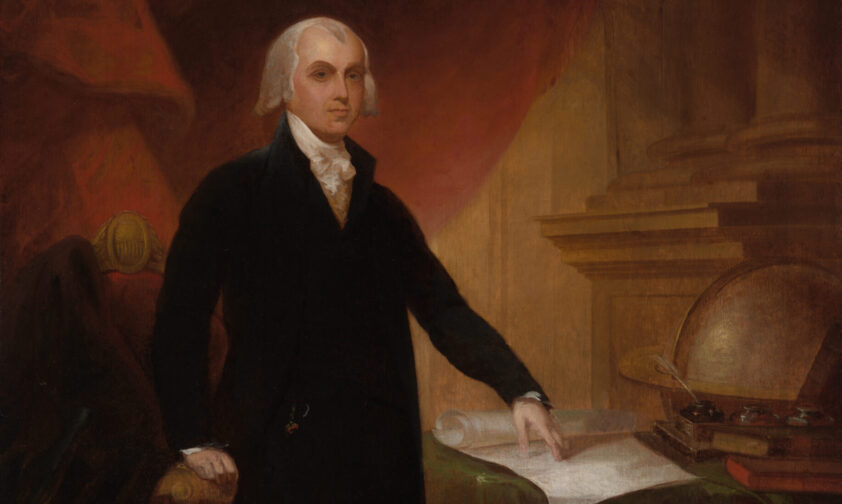
“If a free people be a wise people also, they will not forget that the danger of surprise can never be so great, as when the advocates for the prerogative of war, can sheathe it in a symbol of peace.”
-James Madison, “Helvidius” Number 4, September 14, 1793
The 2026 midterms were the latest lesson that reckless foreign policy can lose elections.
In November 2024, Americans elected Republicans in decisive majorities to bring down the cost of living and avoid new foreign wars. Just two years later, Americans rejected Republicans in decisive majorities because of new foreign wars and the higher prices that followed. The story of the midterms is simple―America rebuffed Republicans for not delivering on the promises they ran on. As tensions continue to build post-election and the President considers whether to re-escalate the war, learning the right lessons from the midterms is more important than ever.
Americans felt alienated by the decision to go to war, including a crucial cohort of voters who swung to Trump in 2024. Our nation is tired of longstanding conflicts in the Middle East and did not want war with Iran, which is the least popular conflict in the history of U.S. polling. The Trump Administration never sought Congressional approval and failed to convince Americans beyond its hardcore base that using force was necessary or wise rather than continuing to pursue ongoing nuclear negotiations.
There is a longstanding perception in Washington and among the foreign policy elites that voters are apathetic, uninformed or disengaged from foreign policy decisions. But our nation has seen time and time again that foreign policy can quickly become a deciding factor for who and how America shows up at the ballot box when voters are angry about it.
Endless, intractable wars of choice are strategically foolish, and Americans rightly admonish leaders for involving the country in them. Voters rejected Republicans in 2006 for these reasons over the Iraq war. 20 years on, Republicans are re-learning the hard way that indulging hawks on foreign policy instead of putting the interests of Americans first is a route to electoral disaster. Neither party is immune to these risks, and both would do well to heed this lesson.
Why Did Foreign Policy Impact this Election so Heavily?
The Iran War harmed millions of Americans’ pocketbooks in an election focused on affordability. Reduced traffic through the Strait of Hormuz helped drive the national average price of gasoline above $4 for almost 180 days in 2026, according to AAA tracking data. Energy costs had ripple effects in the price of diesel, jet fuel, fertilizer, groceries, and other goods.
Driven by energy price-hikes, inflation jumped 3.1% in the first eight months of the Iran conflict. Inflation in turn contributed to higher interest rates, putting homes out of reach for more Americans. Because of the increase in average mortgage rates, a typical loan-financed buyer of a median priced home in October 2026 paid $3,800 more annually than they would have if pre-war February rates persisted. October AP-NORC polling found that 62% of likely voters rated the war with Iran as one of the most important issues for their vote, alongside 83% similarly rating the cost of living. None of this boded well for Republicans.
On election day, those October polls were put to the test as voters made their frustration clear. NBC exit polling showed that the Iran war was a crucial or major factor in three of four voters’ choices for Congress. A further 63% of voters believed that going to war was the wrong decision. 89% of voters similarly prioritized the cost of living in their vote, along with 87% who cited the price of fuel and 79% who mentioned facing severe or moderate hardship from inflation in the past year

Republican candidates even began to recognize that the war was becoming a political albatross around their necks as the campaign season closed.
On election eve, a White House ally complained to Semafor that “every negative for the GOP this cycle is a downstream effect of Iran.” The same day, Florida Governor Ron DeSantis called the Iran war a “big, big drag” on Republican candidates.
The most direct analysis came from Vice President J.D. Vance himself. In a November 4th X post about the midterms, Vance was plain: “The reason we lost is the war. The president himself said so last night. If you’d like to argue it was worth it, that losing the Senate for the next 6 years was worth it, then do so. Argue it was a worthwhile cost to pay. Agree or disagree, that’s at least honest. But everyone knows why we lost. And any honest conversation about where we go from here must start there.”
How Should Our Leaders Address the Concerns of Our Constituency?
As the 120th Congress gets sworn in, the question on everyone’s mind should be: How do we course-correct our nation’s foreign policy choices and recommit to a disciplined foreign policy centered on vital U.S. interests?
The first step is ending the war in Iran. Congress must grasp its power of the purse and stop funding a war that Americans reject. Legislators should not fund conflicts that they oppose, especially those that continue without their approval. Congress curtailed the bombing of Cambodia in 1973 by cutting off funding for it. It can do so again. Legislators should include language in future bills restricting funds from supporting the operational costs of the war in Iran.
Next, Congress needs to pass legislation strengthening its ability to check unauthorized warmaking. Congress should overhaul the well-intentioned but hard-to-enforce War Powers Resolution of 1973. A new war powers framework should put inertia on Congress’ side by auto-sunsetting funds for conflicts that legislators do not authorize within a few weeks or less. This approach will encourage Presidents to make clearer cases to the American people and Congress for why proposed missions are in U.S. vital national interests, and discourage uses of force that are not.
Most importantly, policymakers in the Executive branch and Congress alike need to revisit their strategic assumptions to refocus on the top priorities for American interests. For the remainder of its term, the Trump Administration should rededicate itself to the original prioritization it laid out in the 2025 National Security Strategy. This should mean reducing U.S. commitments and force posture in the Middle East and Europe and turning to our regional partners to be responsible for more of their own security.
The Bottom Line
Keeping electoral promises matters. Republicans pursued a foreign policy directly at odds with what they campaigned on in 2024. This decision recreated the affordability crisis that brought them to office in the first place and sealed their fate in 2026.
Fortunately, the outlook for U.S. strategic reflection is still strong. If policymakers learn the right lessons, the United States can rededicate itself to the example of statecraft our Founding Fathers set for it―acting as a shining example of the virtues of freedom and liberty, rather than seeking to impose these values by force.
In the years to come, let Americans rediscover John Quincy Adams’ advice to be the “well-wisher to the freedom and independence of all” but “champion and vindicator of only [our] own.”